From Creative Toy to Commercial Tool: OpenAI Launches ChatGPT Images 2.0
- David Borish

- Apr 21
- 6 min read

OpenAI Launches ChatGPT Images 2.0
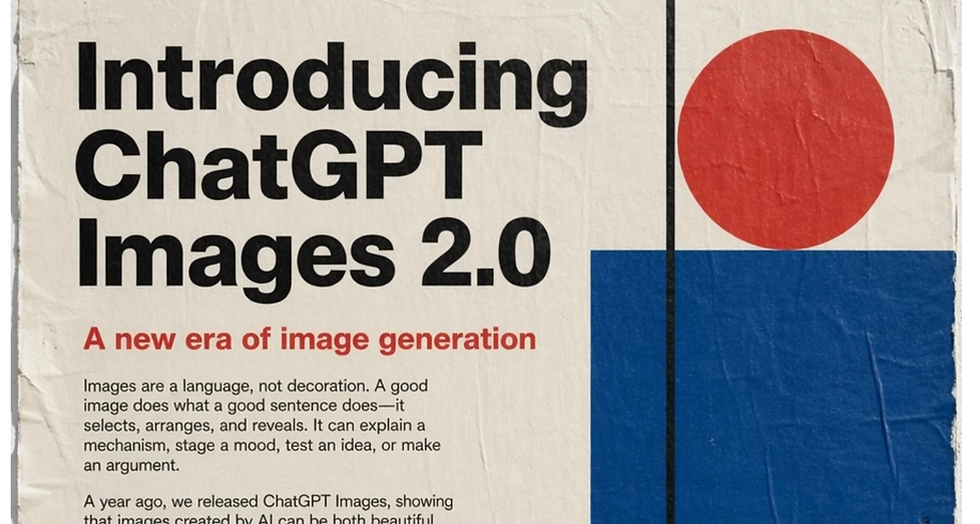
For years, the easiest way to spot an AI-generated image was to look at the text. Signs with garbled letters. Product labels with phantom words. UI mockups where the button copy read like an alphabet experiment gone wrong. Text rendering was generative AI's most visible and most commercially limiting failure, and every major model shipped with the same limitation. OpenAI claims that era is over.
ChatGPT Images 2.0, announced today April 21, reports 99% glyph accuracy on standard typography benchmarks. The model renders multi-line headlines, dense paragraph text, product labels, and UI copy with enough fidelity that early testers have described the outputs as production-ready. For an industry that has spent three years treating AI-generated imagery as something that needs a human designer to finish, that claim carries real commercial weight.
What Actually Changed Under the Hood
The most significant technical detail isn't a feature. It's an architecture. Previous OpenAI image models were built on top of GPT-4o's image pipeline, meaning every generation required a text-model step before the image engine could begin working. That two-stage process added latency and limited the model's ability to reason about what it was rendering.
ChatGPT Images 2.0 runs on gpt-image-2, a standalone model that uses single-pass inference. Before drawing any pixels, the model runs a reasoning step over the prompt.
The result is a system that doesn't just pattern-match visual elements it has seen before, but interprets relationships between them. One widely circulated example from the model's testing phase on LM Arena illustrated this: when prompted to render a desk with a sticky note reading "call Mina at 9" and a watch, the model drew the watch hands pointing to 9 o'clock. It read the note, inferred the time reference, and applied it to a separate object in the scene.
This reasoning-first approach also explains the typography gains. Previous models treated text as visual texture, frequently producing letter-shaped patterns without reliable accuracy. GPT-image-2 processes text as semantic content before rendering it visually, which is why it can now handle dense paragraph layouts, receipt-style line items with decimal alignment, and code snippets with correct punctuation.
Generation speed has improved substantially. Arena observers measured single-pass generation at approximately three seconds, compared to the 10-to-20-second range that characterized the previous model at high quality settings. Native output resolution reaches 4096×4096 pixels with no upscaling artifacts, and the model supports a wider range of aspect ratios including 16:9 and 9:16 at full resolution.
The Multilingual Breakthrough
Text rendering accuracy for English was already improving before this release. GPT Image 1.5, launched in December 2025, cleared roughly 95% accuracy for Latin-script text. But non-Latin scripts remained a consistent failure point across the entire industry.
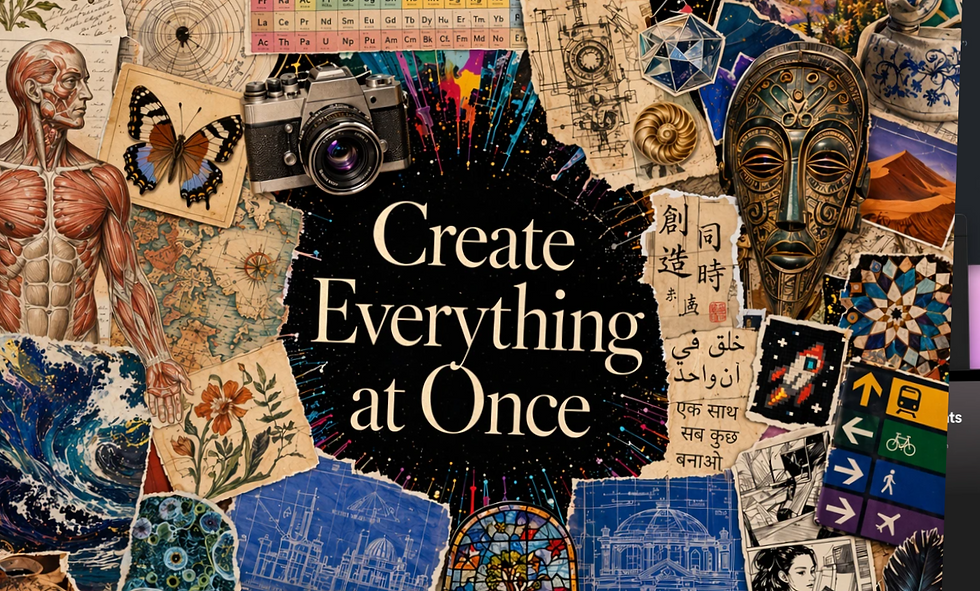
ChatGPT Images 2.0 extends high-fidelity text generation to Japanese, Korean, Chinese, Hindi, and Bengali, among others, with OpenAI claiming support for more than 48 languages total. In demonstrations, the model rendered complex Korean characters within an educational diagram layout, producing text that was not merely translated but coherently integrated into the design. Arabic, Hebrew, and Cyrillic scripts are also supported.
For global marketing teams, localized e-commerce platforms, and multilingual content operations, this changes the workflow. Generating a Korean-language product poster or a Hindi infographic previously required separate typesetting after the image was created. If the accuracy claims hold, that manual step disappears.
Eight Images, One Prompt
Beyond text, the most commercially relevant new capability is multi-image generation. Users can now generate up to eight distinct images from a single prompt while maintaining character and object continuity across the series. A character that appears in image one will look the same in image eight, wearing the same clothes, with the same proportions.
This addresses what had been a tedious workaround in AI image workflows. Creating a consistent set of social media graphics, a manga sequence, or a storyboard previously required generating each image individually and manually ensuring visual consistency across outputs. The new system handles continuity natively, enabling entire visual series from a single interaction.
The Thinking Layer
ChatGPT Images 2.0 ships in two modes. The baseline version is available to all ChatGPT and Codex users and includes the core improvements: better instruction following, typography gains, multilingual support, and broader aspect ratios. Above that sits a "thinking" mode, reserved for paid subscribers on Plus, Pro, Business, and Enterprise plans.
When thinking mode is enabled, the system takes additional time to reason through layout, uses web search for reference, analyzes uploaded materials, and can produce the multi-image outputs with continuity. OpenAI's VP of Research, Jing Li, described thinking and Pro modes as "juiced-up" versions of the base model with tool use, and noted that these advanced modes are slower because they perform more reasoning and search behind the scenes. The trade-off is explicit: more capable outputs in exchange for longer generation times.
Provenance and the Litigation Context
OpenAI embedded what it describes as a "multi-layered stack" of safety protocols into GPT-image-2. The system adheres to C2PA watermarking standards so that AI-generated images carry provenance metadata identifying them as machine-produced. Advanced perception models filter harmful or abusive content, and real-time monitoring enforces usage policies.
This provenance infrastructure arrives at a pointed moment. OpenAI is currently navigating active litigation in both the United States and the European Union over AI training data. Reports of AI-generated characters being used as seeds for realistic political influence videos on social media have increased public and regulatory pressure. Watermarking doesn't resolve the legal questions around training data, but it gives enterprise customers a defensible audit trail when using AI-generated assets commercially.
Codex Labs and the Enterprise Push
The Images 2.0 launch was bundled with a separate announcement: Codex Labs, a program embedding OpenAI engineers directly inside enterprise organizations to help deploy Codex, the company's AI coding and software development agent.
OpenAI named Cognizant and CGI as the first partners in a formal systems integrator program, with both firms embedding Codex into their software engineering groups. Within ChatGPT Business and Enterprise, Codex usage grew 6x between January and April 2026. OpenAI's enterprise segment now accounts for more than 40% of its revenue and is tracking toward parity with consumer revenue by year-end.
The Codex expansion reflects the same logic as the Images 2.0 release: moving AI tools from creative experimentation toward repeatable commercial workflows. Legacy code modernization, vulnerability detection, code review automation, and agentic task management are all part of the pitch. The enterprise customers already on board include Notion, Ramp, Cisco, and Nvidia.
The Competitive Landscape
ChatGPT Images 2.0 enters a crowded field. Google released its Nano Banana 2 image generation model in February 2026, which also offered dense text rendering baked into images. Midjourney continues to lead among creative professionals who prioritize artistic style and aesthetic control. Stability AI and the open-source Flux models offer deployment flexibility that OpenAI's closed API cannot match.
Where OpenAI appears to have opened a gap is at the intersection of text accuracy, instruction following, and production reliability. Midjourney has historically lagged on text rendering. Google's model narrowed the gap but, based on early comparisons, still trails on complex typography tasks. For workflows where the image needs to include accurate copy, whether a product mockup with a tagline, a slide deck with data labels, or a storefront sign in Korean, GPT-image-2 appears to be the current leader.
The underlying gpt-image-2 model is also available through the API for developers, which positions it as infrastructure for automated content pipelines rather than just a consumer feature inside ChatGPT.
What Remains Unproven
The 99% typography figure comes from OpenAI's own benchmark testing, and benchmark performance frequently diverges from real-world production use, particularly with nuanced or edge-case inputs. The phased rollout, starting with paying subscribers before opening the API broadly, suggests OpenAI itself wants a controlled feedback loop before the model faces the full diversity of commercial use cases.
The model also has known limitations. A widely shared test involving a Rubik's Cube mirror reflection stumped it, a challenge that remains unsolved across the industry. And the "thinking" mode's trade-off of slower generation for better outputs introduces latency that may not suit every workflow.
Still, the trajectory is clear. Three years ago, AI image generators couldn't reliably spell a three-word sign. Today, OpenAI is claiming they can render a full newspaper layout with correct typography in 48 languages. The question is no longer whether AI can generate usable commercial imagery, but how quickly the workflows around it will adapt.
This pattern of capabilities maturing from impressive-but-unreliable demonstrations to production-grade tools is a recurring theme in AI development. It's one of the central dynamics explored in my forthcoming book, The Tony Hawk Paradox, which examines how breakthroughs first appear in controlled or digital environments before reshaping the physical and commercial world. The transition of AI image generation from creative novelty to commercial design tool is the pattern in real time.